Chapter 33 of 34
Remember the state: sorting, scroll position, open nodes
After a reload everything looks like before – one localStorage key per table.
After this chapter you can
- switch on autoRestoreOptions
- remember expanded tree nodes
- choose a storage key
Switch it on
TableOptionsIf.autoRestoreOptions stores the state of a table in localStorage and restores it on
the next start. Start from AutoRestoreOptions and switch on what you need:
import { AutoRestoreOptions, TableOptions, type TableOptionsIf } from "@guiexpert/table";import type { Order } from "./data/orders";
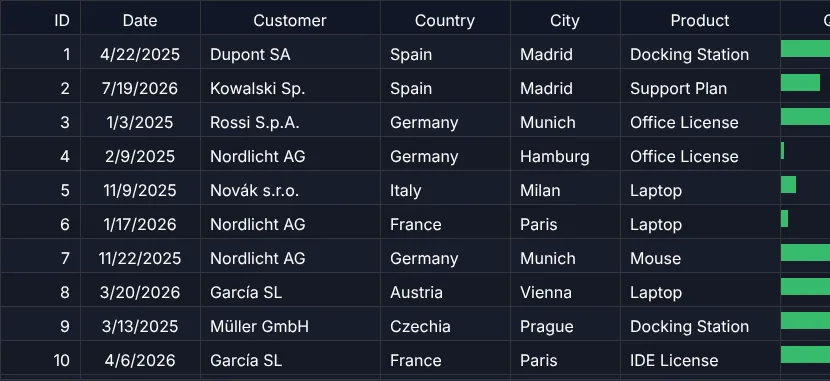
export function createOrderTableOptions(): TableOptionsIf {  return {    ...new TableOptions(),    autoRestoreOptions: {      ...new AutoRestoreOptions<Order>(),      getStorageKeyFn: () => "ge-demo-orders",          // one key per table (localStorage)      autoRestoreSortingState: true,      autoRestoreScrollPosition: true    }  };}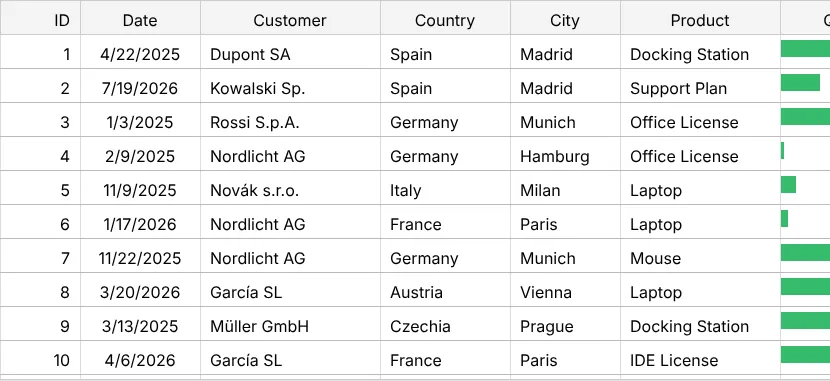
What can be remembered
| Option | Remembers |
|---|---|
autoRestoreSortingState | sorted column and direction (incl. the header icon) |
autoRestoreScrollPosition | scroll position |
autoRestoreCollapsedExpandedState | expanded / collapsed nodes of a tree – needs getRowId |
For trees (chapter 30 (Tree table)) the table needs a stable id per node to recognise it after a reload:
autoRestoreOptions: { ...new AutoRestoreOptions<OrderNode>(), getStorageKeyFn: () => "ge-demo-order-tree", getRowId: node => node.id, // "Czechia", "Czechia/Becker KG", "4711" autoRestoreCollapsedExpandedState: true, autoRestoreScrollPosition: true}Next
The last chapter: a checklist for your own table – and when to choose something else. chapter 34 (Checklist & finale).